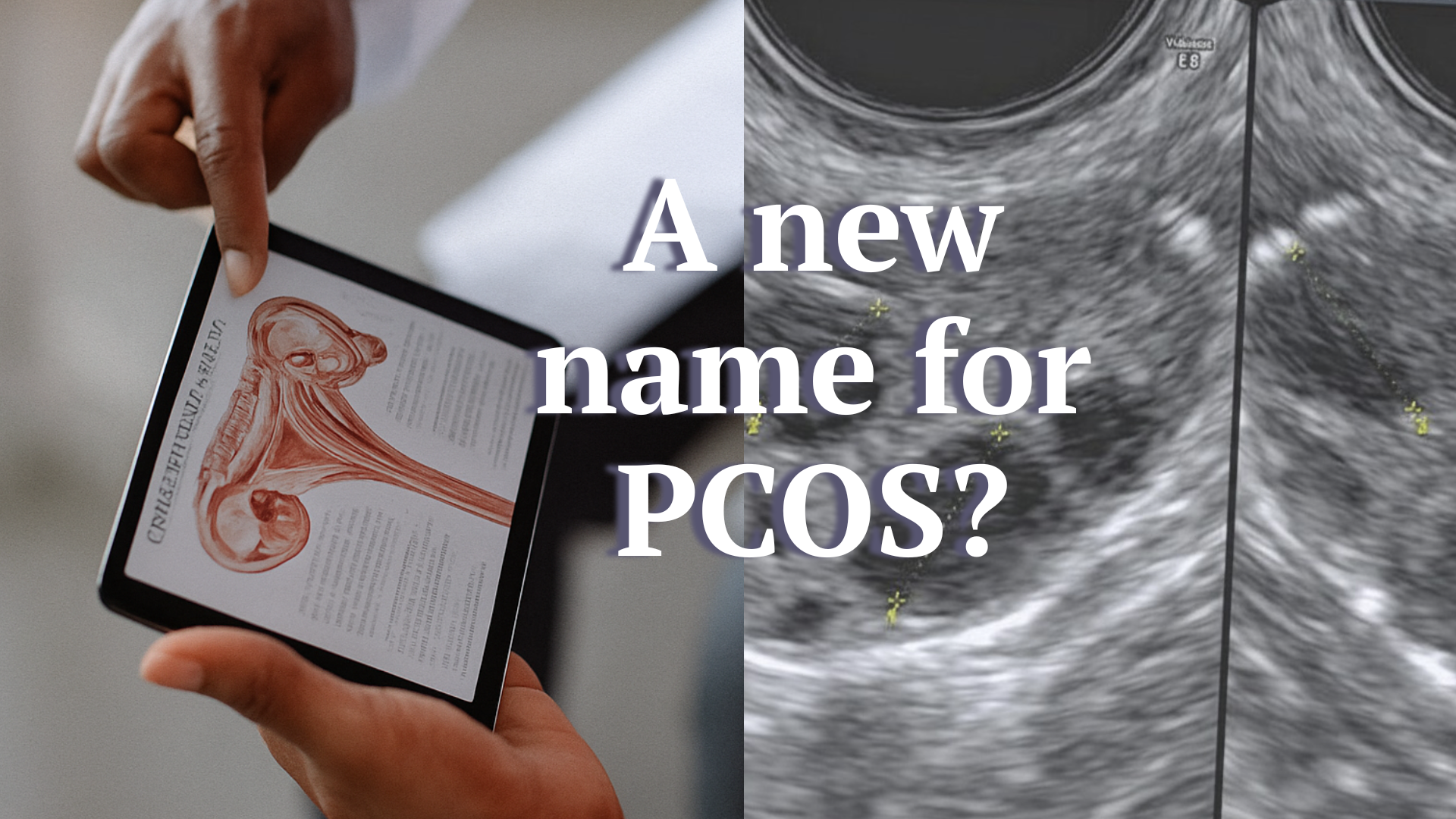
For nearly a century, millions of individuals showing up at doctors’ offices with a complex web of hormonal, metabolic, and cycle-related issues were handed a single label: Polycystic Ovary Syndrome (PCOS).
But on May 12, 2026, in a historic move, a global coalition of 56 leading academic, clinical, and patient organizations formally announced a transition from the term “PCOS” to PMOS: Polyendocrine Metabolic Ovarian Syndrome. Backed by a landmark study published in The Lancet, this is far more than a cosmetic terminology update. It reflects a major shift in how the condition is understood medically and may reshape how clinicians and patients approach diagnosis, treatment, and long-term health risks moving forward.
Here is a breakdown of why this shift happened, how the new name was chosen, and why it matters for patient care and evolving medical standards.
What the Name “PCOS” Got Wrong
For decades, the word “polycystic” led many patients to believe their condition was primarily about ovarian cysts. It narrowed a complex, systemic condition down to a single reproductive organ.
Over time, many clinicians and researchers came to view the name as incomplete and misleading.
The “cysts” seen in PCOS are typically immature ovarian follicles, not pathological ovarian cysts in the traditional sense. That distinction matters because it changes how patients understand their bodies and how clinicians prioritize evaluation and treatment.
Researchers and patient advocates have long argued that the name contributed to real-world harms for the estimated 170 million women affected globally, including:
- Delayed Diagnosis: Many patients report years-long delays before receiving a diagnosis, particularly when ultrasounds appeared “normal” or lacked classic ovarian findings.
- Underdiagnosis: Because the old terminology focused so heavily on reproductive findings, many patients with primarily metabolic symptoms remained undiagnosed.
- Fragmented Care and Stigma: The narrow reproductive focus often reinforced stigma and siloed treatment into gynecology, despite the condition’s broader metabolic and endocrine impacts.
Inside the 14-Year Project: How PMOS Was Chosen
Renaming a disease across global healthcare systems is a massive undertaking and previous efforts had stalled for years. To address that challenge, a large international collaboration was launched by Verity, a UK patient charity, alongside Monash University’s Centre for Research Excellence in Women’s Health and the Androgen Excess and PCOS Society.
The coalition used a multistep global consensus process involving Delphi surveys, workshops, and implementation analyses. According to the published consensus process, researchers gathered 14,360 responses, including 10,411 patients and 3,949 healthcare professionals from around the world.
The group established several guiding principles for the new name. It needed to be:
- scientifically accurate
- easy to communicate
- culturally appropriate
- feasible to implement globally
- less stigmatizing for patients
Anatomy of the New Name: Why PMOS?
Rather than creating an entirely unrelated name, the coalition chose what researchers described as an “evolutionary rebrand.” The goal was to maintain some continuity with the term PCOS while better reflecting current science and minimizing disruption to medical systems, coding structures, and patient familiarity.
Polyendocrine
This reflects that the condition involves multiple interacting hormone systems, including insulin, androgens, and neuroendocrine pathways.
Metabolic
This was one of the most strongly supported additions among survey participants. The term elevates the condition beyond a narrow gynecologic framework and emphasizes its links to insulin resistance, type 2 diabetes, obesity, dyslipidemia, cardiovascular risk, and sleep apnea.
Ovarian Syndrome
Experts ultimately retained “ovarian” because it remained anatomically relevant while avoiding the misleading implication that ovarian cysts define the condition.
Researchers also noted that terms like “ovulatory” did not fully capture the broader ovarian and follicular changes associated with the syndrome.
What Changes for Clinical Care?
For many patients, the PMOS transition is deeply validating.
If you have ever felt dismissed because your ultrasound appeared “normal,” the shift acknowledges something patients and many clinicians have argued for years: this condition extends far beyond ovarian imaging findings. Importantly, the core diagnostic criteria under the international guidelines remain largely unchanged. Diagnosis still generally involves at least two of the following:
- irregular ovulation
- elevated androgen levels
- polycystic ovarian morphology or elevated AMH findings
What is evolving, however, is the broader clinical framework surrounding the condition.
Under the PMOS model, there is increased emphasis on:
- early metabolic screening
- insulin resistance evaluation
- cardiovascular risk assessment
- long-term endocrine monitoring
Even in patients whose ultrasounds appear normal.
Why Both Names Matter Right Now
A global transition of this scale cannot happen overnight.
To avoid confusion and maintain continuity across insurance systems, research databases, and medical records, healthcare organizations are currently using both names concurrently, often phrased as “PMOS, formerly known as PCOS.” Behind the scenes, implementation efforts are already underway involving international classification systems, clinical guidelines, educational materials, and coding infrastructure.
The consensus group proposed a managed three-year transition period that includes ongoing monitoring, evaluation of emerging subtype research, and refinement of terminology as scientific understanding continues to evolve. The updated terminology is also expected to be integrated into future revisions of the International Evidence-Based Guideline, which is currently used in more than 190 countries.
The Legal Perspective: Evolving Standards and Accountability
From a legal perspective, the PMOS transition may influence how courts, experts, and healthcare systems evaluate evolving standards surrounding screening, diagnosis, and long-term management.
For years, critics argued that the narrow focus embedded in the term “polycystic” contributed to delayed recognition of metabolic complications and broader endocrine risks. As the medical framework continues shifting toward a more comprehensive understanding of the condition, expectations around metabolic screening and early intervention may evolve alongside it.
That does not mean legal standards change overnight. But it does mean clinicians and healthcare systems will likely face increasing scrutiny if care remains narrowly focused on reproductive symptoms alone while broader metabolic concerns go unaddressed. Moving forward, the transition to PMOS signals a broader push toward treating this condition as the complex, multisystem disorder many patients have long experienced it to be.
References
- Teede, H., Bahri Khomami, M., Morman, R., Laven, J. S. E., Joham, A. E., Costello, M. F., Patil, M., Rees, D. A., Berry, L., Cree, M. G., Zhao, H., Norman, R. J., Dokras, A., & Piltonen, T., on behalf of the Global Name Change Consortium. (2026). Polyendocrine metabolic ovarian syndrome, the new name for polycystic ovary syndrome: a multistep global consensus process. The Lancet. Advance online publication. https://www.thelancet.com/journals/lancet/article/PIIS0140-6736(26)00717-8/fulltext
- Endocrine Society. (2026). Expert global coalition renames polycystic ovary syndrome to better reflect its health impacts. Endocrine Society Newsroom. https://www.endocrine.org/news-and-advocacy/news-room/2026/pcos-name-change
- International Endocrinology Association. (2026). From PCOS to PMOS: Understanding the global medical name change. International Endo Insights. https://internationalendo.com/pcos-new-name-pmos/
Disclaimer
Legal and Medical Disclaimer: The information provided in this article is for educational and informational purposes only and does not constitute legal or medical advice. Reading this article does not establish an attorney-client relationship with Liro Willer Law. While this content discusses evolving medical standards of care and potential legal frameworks, medical malpractice determinations are highly fact-specific and vary by jurisdiction. Individuals seeking medical diagnosis or treatment should consult a licensed healthcare professional. Individuals seeking legal advice regarding potential medical negligence or malpractice should consult a qualified attorney licensed in their jurisdiction.