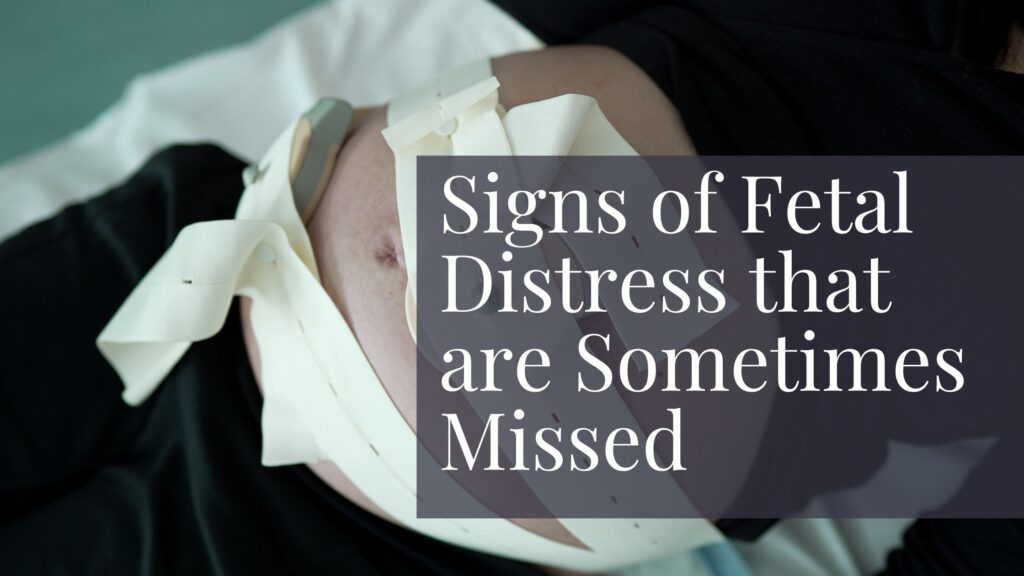
Many parents recall watching the fetal heart monitor during labor and sensing that something was not right. Alarms sounded. Nurses repositioned. Reassurances were given.
After an HIE diagnosis, families often wonder whether signs of fetal distress were missed or not acted on quickly enough.
HOW FETAL DISTRESS IS MONITORED DURING LABOR
During labor, a baby’s heart rate is monitored to assess how well the baby is tolerating contractions. Providers look at patterns, not just individual heart rate numbers.
These patterns can provide early warning signs that a baby may not be getting enough oxygen.
COMMON SIGNS OF FETAL DISTRESS
Signs that may indicate fetal distress include:
• Recurrent late decelerations
• Minimal or absent variability
• Prolonged drops in heart rate
• Tachysystole, or contractions that are too frequent
• Worsening patterns that do not improve with interventions
These patterns require timely recognition and response.
WHEN SIGNS RAISE QUESTIONS AFTER HIE
Questions often arise when monitoring shows concerning patterns over time without clear escalation or intervention.
Sometimes parents are told that the monitor is difficult to interpret or that changes were not severe enough to require action. In other cases, documentation may show persistent abnormalities.
WHAT RECORDS MATTER MOST
Reviewing fetal monitoring strips alongside nursing notes and the labor timeline is often essential to understanding whether signs of distress were present and how they were addressed.
LOOKING BACK WITH CLARITY
If you are wondering whether signs of fetal distress were missed during labor, a careful review of the medical records can help provide answers grounded in the details of what occurred.
Talk with a birth injury lawyer about what happened here
Legal Information Disclaimer: This page is provided for general informational and educational purposes only and does not constitute legal advice. The information on this page is not a substitute for legal advice tailored to the specific facts of your situation. Reading or using this information does not create an attorney-client relationship.