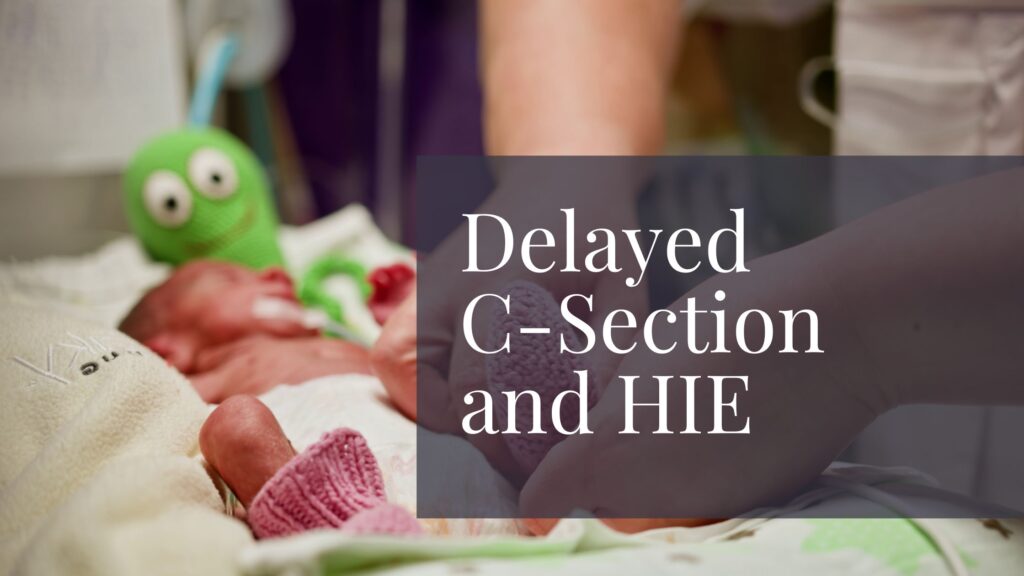
Many parents whose babies are diagnosed with HIE remember asking the same question during labor: “Why isn’t a C-section happening yet?”
Concerns about delayed cesarean delivery are one of the most common reasons families later seek clarity about what happened during birth.
WHEN A C-SECTION IS CONSIDERED DURING LABOR
A cesarean delivery may be considered when:
• A baby shows ongoing signs of fetal distress
• Labor is not progressing despite adequate contractions
• There are concerns about oxygen delivery to the baby
• Other complications arise that make vaginal delivery unsafe
In these situations, timing matters.
WHY DELAYS CAN MATTER IN HIE CASES
When a baby is experiencing distress, prolonged labor can mean prolonged stress on the brain. Oxygen deprivation does not always occur instantly. It can worsen over time if conditions are not corrected.
Questions often arise when:
• Fetal heart rate abnormalities persist
• Pitocin is continued or increased despite concerning tracings
• Decision-making is delayed
• There is a long interval between the decision for a C-section and delivery
Not every delay results in injury. But in some cases, the timing of intervention is critical.
WHAT RECORDS HELP ASSESS A DELAYED C-SECTION?
Evaluating whether a delayed C-section may have contributed to HIE involves reviewing:
• Fetal heart monitoring patterns
• Documentation of decision points
• Nursing and physician communications
• The decision-to-delivery timeline
• Operating room availability and response time
This analysis focuses on what was known at the time decisions were made.
SEEKING CLARITY ABOUT TIMING
If you are questioning whether a C-section should have happened sooner, a careful review of the labor records can help clarify whether timing may have played a role in your baby’s injury.
Talk with a birth injury lawyer about what happened here
Legal Information Disclaimer: This page is provided for general informational and educational purposes only and does not constitute legal advice. The information on this page is not a substitute for legal advice tailored to the specific facts of your situation. Reading or using this information does not create an attorney-client relationship.